Why an Integrated HOA Community Calendar Matters
Written by: Stephen Smellie
Published on: March 4, 2026
As an HOA board or CAM, keeping a community running isn’t just about enforcing rules and collecting assessments. It is about connection. It is about making sure the people who live in a community actually feel like they are part of one. And that is harder than it sounds. Volunteer board members have their daily jobs and families to take care of, and homeowners also have their busy schedules. In most cases, these schedules clash, and even the most well-intentioned communities end up feeling disorganized and disconnected. Information about upcoming events and meetings gets buried in email threads and text messages. Meetings get poorly attended, and events get forgotten.
I have seen this pattern play out across many self-managed communities. And more often than not, the problem isn’t lack of effort, but a lack of infrastructure. And when I talk of infrastructure, I mean the kind of infrastructure that keeps everyone on the same page without requiring a full-time staff to maintain it.
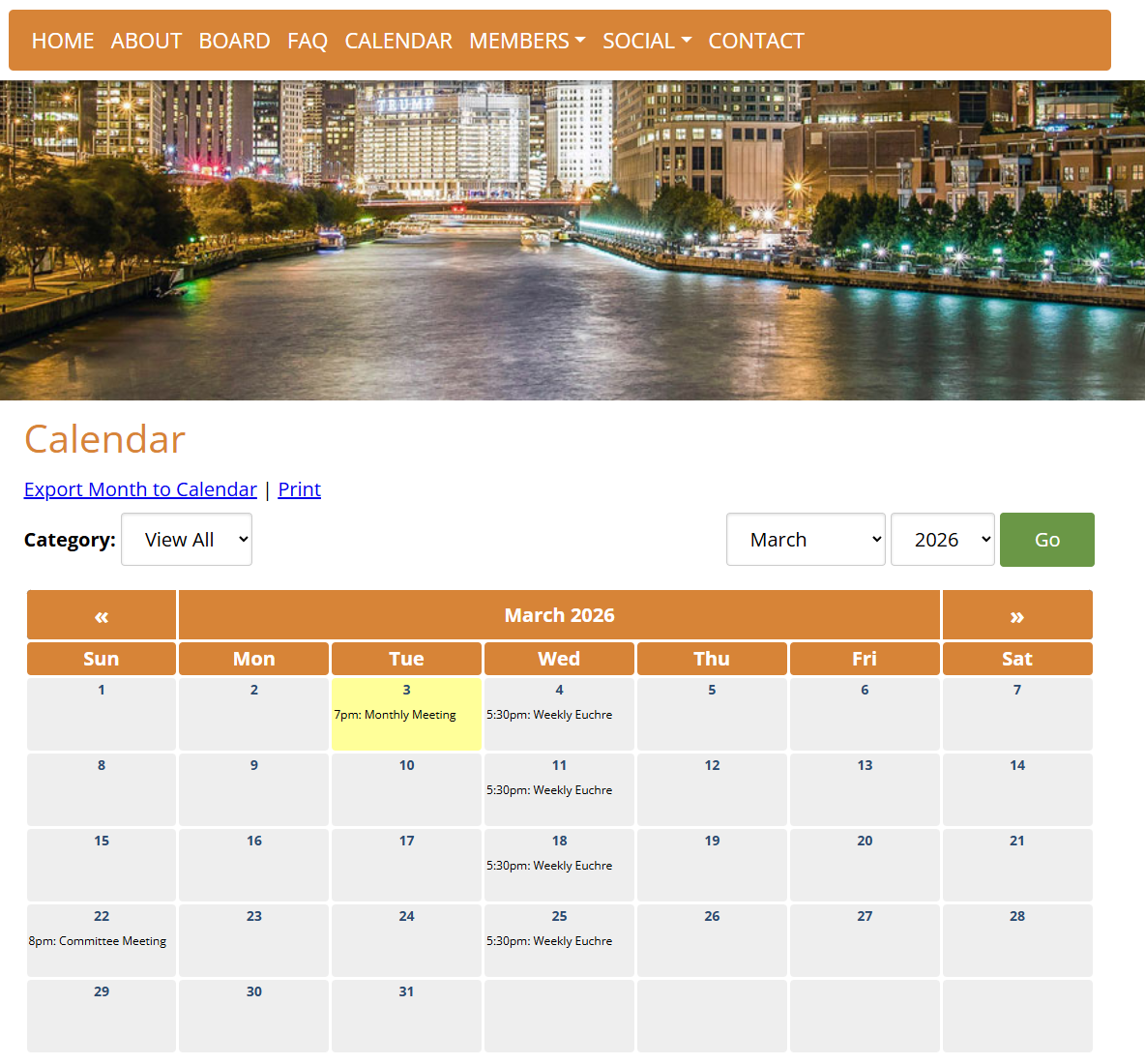
That is where an integrated community calendar comes in. A centralized calendar, integrated into the HOA website, is interactive, and everyone who lives inside your community can use it to view details of all the upcoming events, cancelled events, and so on. In this guide, I will walk you through the benefits of having an integrated HOA community calendar and then show you the things that you need to include in your calendar.
Saves time
HOA board members don’t sign up because they have extra hours to spare. They step up because they care about the neighborhood. But caring doesn’t create more hours in the day. The same goes for residents. Most people want to stay informed and participate in community affairs, but only if it doesn’t feel like a part-time job to do so.
An integrated community calendar respects everyone’s time. When upcoming meetings, events, maintenance windows, and community deadlines are all visible in one place, and when residents can opt into reminders without hunting down contact information, checking what’s upcoming becomes easier.
From a board management standpoint, it is equally a time saver. Instead of manually reaching out to remind homeowners about an upcoming annual meeting or a pool closure through phone calls, the calendar handles the communication automatically. That is time-saving on both the resident and management side.
Keeps the residents informed
One thing I have learned in community management is that most homeowners’ frustration doesn’t come from disagreements but from surprises. That is why you’ll find many homeowners against special assessments, not because they are not ready to fund community projects, but because they are simply unexpected surprises.
The same happens when it comes to community affairs. When homeowners feel out of the loop, they assume the management simply wants to do its thing without involving them. But when they are kept informed, even imperfect decisions don’t hurt as much.
A community calendar is one of the simplest ways to keep residents informed on a consistent basis, without having to send emails and make phone calls. When people can see what is coming, such as board meetings, budget reviews, vendor work, or social events, they feel included in the life of the community rather than just subject to its decisions. That shift in perception helps build a cohesive community.
Improves transparency
I have talked with plenty of board members who say their community has a trust problem. Residents grumble about where assessment money goes. They feel excluded from decisions. They show up to meetings already on the defensive. Most of that friction is preventable with better communication, and a public-facing calendar is the first step.
When budget review meetings, committee sessions, and financial discussions are scheduled and visible to the entire community, it signals openness. It says: “we are not hiding anything, and you are welcome to be part of this”.
That kind of transparency helps reduce conflict and invites contribution. For example, some of your quietest residents might have a background in financial management, project management, or event planning. They won’t volunteer those skills if they never know there is a need.
Helps meet quorums
Any board member who has had to adjourn a meeting for lack of quorum knows the frustration. You have prepared the agenda, coordinated schedules, and gotten the space already, only to reschedule because not enough homeowners showed up. And rescheduling rarely goes better the second time.
An integrated calendar with built-in registration tools, automated reminders, and RSVP tracking changes. When residents can confirm attendance in advance and receive reminders as the date approaches, boards get a much clearer picture of expected turnout before the meeting ever happens. That means fewer surprises, fewer adjournments, and a healthier democratic process.
On top of formal meetings, the same tools apply to community events. Features like registration management, waitlists, and even QR code check-ins turn a simple calendar listing into an actual engagement platform, one that helps boards understand who is participating and follow up after events close.
Reduces the mental load
Volunteer board members carry a lot. They are tracking vendor contracts, fielding resident complaints, preparing for meetings, and managing community finances, all on top of their regular lives and daily jobs. When community events and deadlines live in a centralized calendar that sends automated reminders, it removes one more thing from the mental pile.
That might not sound big, but in reality, burnout is one of the leading reasons good board members step down. Anything that reduces the cognitive load of running a community is worth taking. With an integrated calendar, board members don’t have to remember when the pool inspection is due or whether the budget review meeting has been scheduled.
The same applies to residents. Nobody likes the stress of missing something important because they didn’t know it was happening, or they forgot when it was happening, and they have to call a board member again. When the community calendar is current, visible, and easy to access, that anxiety disappears.
Improves analytics
What I have talked about so far is how a community calendar can help the board communicate. Other than that, the calendar can help the board learn. For example, as a board member or CAM, have you ever asked yourself these questions:
- Which event draws the most interest?
- Which meeting times see the best attendance?
- Are residents actually engaging with the content you are putting out, or are they tuning it out?
These are questions most boards can’t answer because they have never had a way to track them. But with an integrated calendar that includes engagement analytics, the answers are right there. That kind of data lets you make smarter decisions, such as scheduling popular events during optimal times, identifying gaps in communication, and understanding what your community actually wants more of. Over time, that feedback loop turns a reactive board into a proactive one.
What to include in the HOA community calendar
You’ll only get the full benefit of an integrated community calendar when you know what to include. I’m saying this because I have seen so many HOAs set up a calendar and then only use it for social events. A truly integrated community calendar should be a comprehensive picture of everything happening in the life of the association. That includes:
- Board and community meetings: Every regular board meeting, annual meeting, and committee session should be on there. When residents can see these dates in advance, they can prepare. For example, when attendees prepare for two or one month, there is are high chances they will be more productive during the meeting.
- Maintenance and inspections: Schedule preventive maintenance, common area inspections, and vendor service dates on the calendar. Residents deserve to know when a crew will be working near their home or when the elevator will be out for servicing.
- Reserve projects: If a major repair or a replacement is coming, such as resurfacing the parking lot, replacing the gym equipment, or renovating a clubhouse, put it on the calendar early. This prevents inconveniences. For instance, when residents know a pool will be closed for 3 weeks, they plan accordingly. On the other hand, those who find out the day before end up frustrated.
- Amenity opening and closing dates: Seasonal closures matter to residents more than the board assumes. A pool closing date in October is obvious to the board. To a family that has just moved in, it is easy to miss. Put it on the calendar so everyone knows the state of the community amenities.
- Election milestones: Board elections involve multiple steps: candidate nominations, mailing of election materials, voting periods, and the meeting itself. Each of those touch points should be scheduled and visible. For a transparent, healthy, and democratic election, all the homeowners should be well-informed in advance.
- Budget preparation cycle: The annual budget affects what homeowners pay. Scheduling budget committee meetings, draft review periods, and final approval dates on the community calendar invites residents into that process rather than presenting them with a done deal. That way, even if things go wrong and the HOA needs special assessments, residents understand the state of the community affairs.
- Audits and insurance renewals: Insurance renewals and preparation for annual audits are easy to forget. Putting them on the calendar keeps the board accountable to its own deadlines before they become legal and financial exposure.
- Tax filing dates: In most states, HOAs are under non-profit corporation tax acts. That means the community still has filing obligations, and the penalties for missing them are avoidable. One way of avoiding these penalties is having a calendar entry a few weeks before the due date, so the board has time to prepare.
- Community events: Cookouts, holiday parties, and welcome events for new residents are some of the things that make a neighborhood feel like a community. Schedule them early and publish on the community calendar. This gives committees time to plan, and gives residents time to reschedule their activities.
- Newsletter publication schedule: If your HOA publishes a regular newsletter, schedule it on the community calendar. This helps the team remain consistent and gives volunteers enough lead time to contribute.
- Holidays and office closures: National holidays affect when staff are available, when vendors will respond, and when certain services are accessible. Include these holidays in the community calendar so everyone’s expectations stay calibrated.
Final thoughts
Every HOA board has a responsibility to the people they serve, not just to enforce the rules, but to keep the community functioning, informed, and financially sound. That is a lot to manage for volunteer-led associations where institutional knowledge walks out every time a board member’s term ends. An integrated community calendar addresses some of these fundamental issues by eliminating the gap between what the board knows and what the community knows. When this gap closes, trust grows, participation increases, meetings meet quorums, and deadlines don’t get missed. And to make sure the calendar is accessible to all owners, I suggest you integrate it into your main HOA website, where residents receive the day-to-day communications.