3 Ways Your HOA Website Can Reduce Late Payments
Written by: Christine Ponce
Published on: July 3, 2026
Assessment income is the financial backbone of your HOA as it funds roughly 85 to 90 percent of most association operating budgets. So when homeowners fall behind on dues, you’re putting the entire community at risk. From maintenance contracts and insurance premiums to reserve contributions, none of it gets covered if assessments don’t come in on time and in full.
Delinquencies strain vendor relationships when payments run late. Strained vendor relationships lead to reduced service quality. Reduced service quality leads to deteriorating amenities, deferred maintenance, and a less attractive place to live. What begins as a few unpaid dues snowballs into a community that’s harder to sell into and harder to be proud of.
And the consequences extend well beyond your internal operations. Fannie Mae and Freddie Mac factor delinquency rates into their mortgage lending decisions for condo communities. If you push delinquencies past 15%, conventional financing vanishes. And no conventional financing means fewer qualified buyers, which means lower demand, which means declining property values. Every homeowner in your association, paying or not, has skin in this game.
Here’s the good news: reducing late payments doesn’t have to mean lawyer letters, lien filings, and tense board meetings. For many communities, the most effective first move is something already within reach: an HOA website. A website with the right features and set up correctly can stop delinquencies by sending timely reminders and making the payment process easy or entirely automatic. Here are 3 ways your HOA website can reduce late payments.
Enable online payments through your HOA website

Before your board jumps to conclusions about why homeowners are paying late, take a look at what the research actually shows. A NerdWallet survey of more than 2,000 U.S. adults found that only 33 percent of people who missed a payment did so because they couldn’t afford it. The leading reason? Forgetfulness – cited by 35 percent of late payers. Broader payment behavior data backs this up: about 31 percent of late payers report simply confusing the due date, and another 25 percent say the bill slipped their mind entirely.
That means the majority of late payments in your community may have nothing to do with financial hardship. They’re process failures, and a big part of the problem is friction.
Think about what it takes for a homeowner to pay by check: write it out, find an envelope, dig up a stamp, and actually mail it before the deadline. Any one of those steps can stall the whole thing. And even when a homeowner follows through, postal delays can still make a timely payment arrive late. Speaking from my time in community management, the “check’s in the mail” call was one of the most frustrating because it’s often true, and it still doesn’t solve your cash flow problem.
The other problem is the kind of people you’re dealing with. A GoBankingRates survey found that nearly half of Gen Z and millennial adults didn’t write a single check in 2023. And this isn’t purely a generational issue, and they’re becoming a big portion of home buyers. If you only accept checks, you’re creating a barrier for younger homeowners.
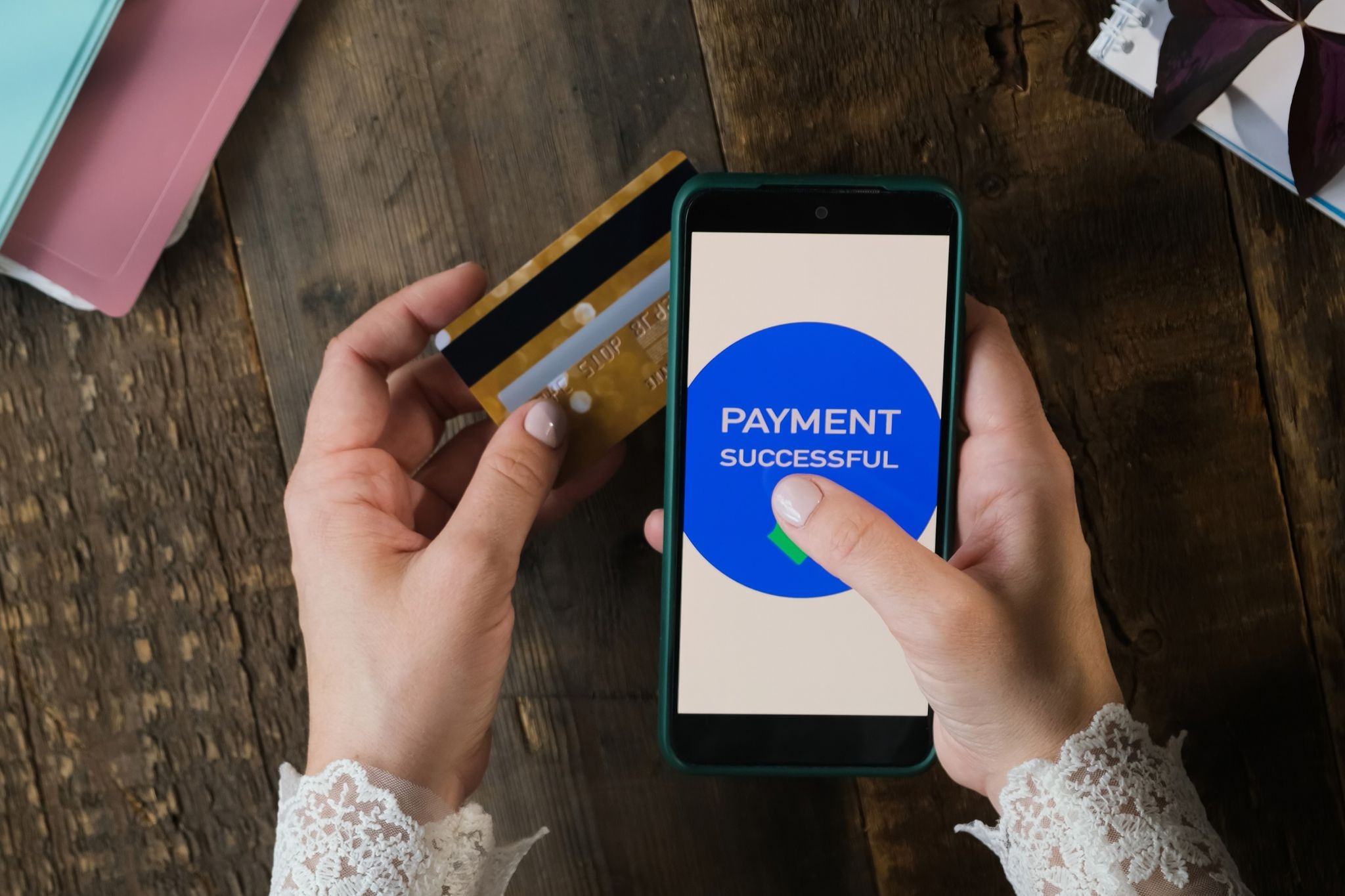
A payment portal built directly into your HOA website removes that friction at every level. Homeowners log in, make their payment, and they’re done. There are no envelopes, no stamps, and no uncertainty about delivery. Electronic payments post immediately, which gives your treasurer a far more predictable, consistent picture of the association’s financial position each month. And when payments come in on time, the need to assess late fees drops.
Offer multiple payment options
One mistake I see boards make, even after setting up online payments: only supporting a single payment method. You’ve removed some friction, but you’ve still left the door open for a portion of your community to get stuck. In fact, a Fiserv consumer payments survey found that 84 percent of respondents consider the option to pay by credit card a must-have or nice-to-have, with 79 percent saying the same about debit cards.
So, to get the best from your online payment portal, the portal should support credit cards, debit cards, ACH transfers, and eChecks at a minimum. The broader the range of accepted methods, the fewer reasons homeowners have to delay.
Set up autopay
If I had to point to one feature with the most direct impact on delinquency, it would be autopay. Not because it’s the flashiest tool in your arsenal, but because it eliminates the single biggest cause of late payments entirely. We already established that forgetfulness leads the list of reasons homeowners miss payments. Autopay makes forgetting structurally impossible.
The Consumer Financial Protection Bureau put hard numbers to this in a 2023 study: accounts on manual payment carry a delinquency rate of 17 percent, compared to just 6 percent for accounts enrolled in autopay. That’s nearly three times the delinquency risk, and the difference has nothing to do with financial capacity or intent. It comes down entirely to whether or not someone has to remember to act. Remove that requirement, and behavior changes.
The operational upside for your board is just as real as the collection’s outcome. When a meaningful share of your homeowners are on recurring payments, you’re spending far less time each month chasing down those who haven’t paid. Your board gets that time back to focus on things that move the community forward.
Make the payment experience easy to use
The data on how quickly people abandon a frustrating digital experience should give you pause. Google research found that 53 percent of mobile users leave a web page that takes longer than three seconds to load. For a homeowner already managing a full schedule, even minor technical friction is enough to delay a payment that would have otherwise gone through.
Mobile optimization is the baseline expectation. Your residents bank, shop, and pay utilities from their phones. In fact, 61 percent of consumers say they’re more likely to complete a transaction on a mobile-friendly website. For HOA dues where the goal is to make paying as seamless as possible, make sure the website is mobile-friendly.
Automate payment reminders
One of the least-discussed costs of delinquency is the administrative weight it puts on the people running your community. Research suggests the average business spends up to 14 hours per week managing late payments, which is over 700 hours a year. For a professional community manager, that’s a meaningful drain. For a volunteer board member already balancing a full-time job and a personal life, it’s simply not sustainable.
The problem with manual invoicing and follow-up is that every step requires individual human attention. Someone generates the statement. Someone tracks who’s paid and who hasn’t. Someone drafts the reminder. Someone follows up on the reminder. None of it is consistent, none of it is automated, and all of it compounds month after month. Finance teams in mid-sized organizations report that payment follow-up alone can consume close to 40 hours per week.
Before your board reaches for enforcement tools, it’s worth understanding what’s actually driving most late payments in your community. The honest answer, backed by behavioral research, usually isn’t financial hardship, and it usually isn’t deliberate avoidance. It’s simply how the human brain is wired.
Psychologists call it present bias: the tendency to treat obligations that feel distant as less urgent than whatever is immediately in front of us. For a homeowner with a packed schedule, the dues due on the 1st don’t feel pressing on the 28th, so they get pushed, and pushed again, until they’re past due. Research published in Frontiers in Psychology describes the mindset: someone prone to this pattern asks themselves “when’s the latest I can do this?” rather than “when’s the earliest I can get this done?” That framing consistently makes them vulnerable to delay.
What this means is that a well-timed reminder can do more to move a payment across the line than almost any enforcement measure. And this is one of the ways your HOA website can help with: sending automated payment reminders. The effectiveness data here is hard to ignore.
Research shows that automating payment reminders can reduce delinquency by 30 to 50 percent and accelerate incoming payments by 10 to 15 days on average. First reminders alone carry a 40 to 60 percent success rate, with follow-up reminders contributing another 20 to 30 percent. Layer in a combination of email and SMS, and those rates climb further still. Organizations that execute automated reminder systems effectively report payment rates improving by as much as 50 percent.
One feature that makes automated reminders well-suited for HOAs is that they’re configured to stop. A smart reminder system notifies a homeowner before the due date, follows up afterward if payment hasn’t been posted, and then automatically goes quiet the moment it does. This prevents one of the most damaging failures of manual follow-up: sending a collection notice to a homeowner who paid three days ago because no one had updated the ledger yet.
Increase financial transparency through a member-only portal
There’s another driver of late dues that boards rarely talk about openly: distrust. When homeowners write a check or click “pay” each month, they’re making a trust decision. They’re choosing to believe that their dues are being managed responsibly and spent on things that benefit the community. When that trust erodes, payment behavior shifts. Some homeowners don’t stop paying outright. They delay. They hold their payment while waiting for an unanswered question to get resolved, or while quietly stewing over a charge that appeared on their statement without any explanation.
The frustrating part is that this happens even when the board is doing everything right. Many HOA disputes trace back not to actual financial mismanagement, but to the perception of it because of the absence of information that leaves homeowners room to assume the worst.
A homeowner who isn’t sure what they’re being asked to pay for, or why, is a homeowner who’s going to hold off until they get clarity. And if getting that clarity means digging through old meeting minutes, emailing a board member, or formally requesting documents from management, some of them are going to wait a very long time.
A member-only portal on your HOA website closes that gap. When homeowners can log in at any time and see their current balance, confirm that their last payment was posted correctly, review how community funds are being allocated, and access financial documents without having to ask anyone, there’s no mystery left. And when there are no unanswered questions sitting between them and the “pay now” button, they’ll pay.
Final thoughts
Late payments rarely happen because homeowners are bad actors. As I’ve laid out across these three strategies, most delinquencies come down to friction, forgetfulness, and a quiet erosion of trust, all of which your HOA website is positioned to address. When you enable online payments, you eliminate the process barriers that cause even well-intentioned homeowners to pay late. And when you offer multiple payment methods and autopay, you make paying essentially automatic for a large portion of your community. Build a fast, mobile-optimized portal, automate reminders, and you’ll have a billing system that doesn’t depend on anyone’s memory to function.